Tri-band describes three radio bands or radio groups in a product’s design. It does not mean three times the speed for one phone. Before comparing boxes, identify the actual frequencies and what each radio does for clients and for communication between mesh units.
Identify the three radios
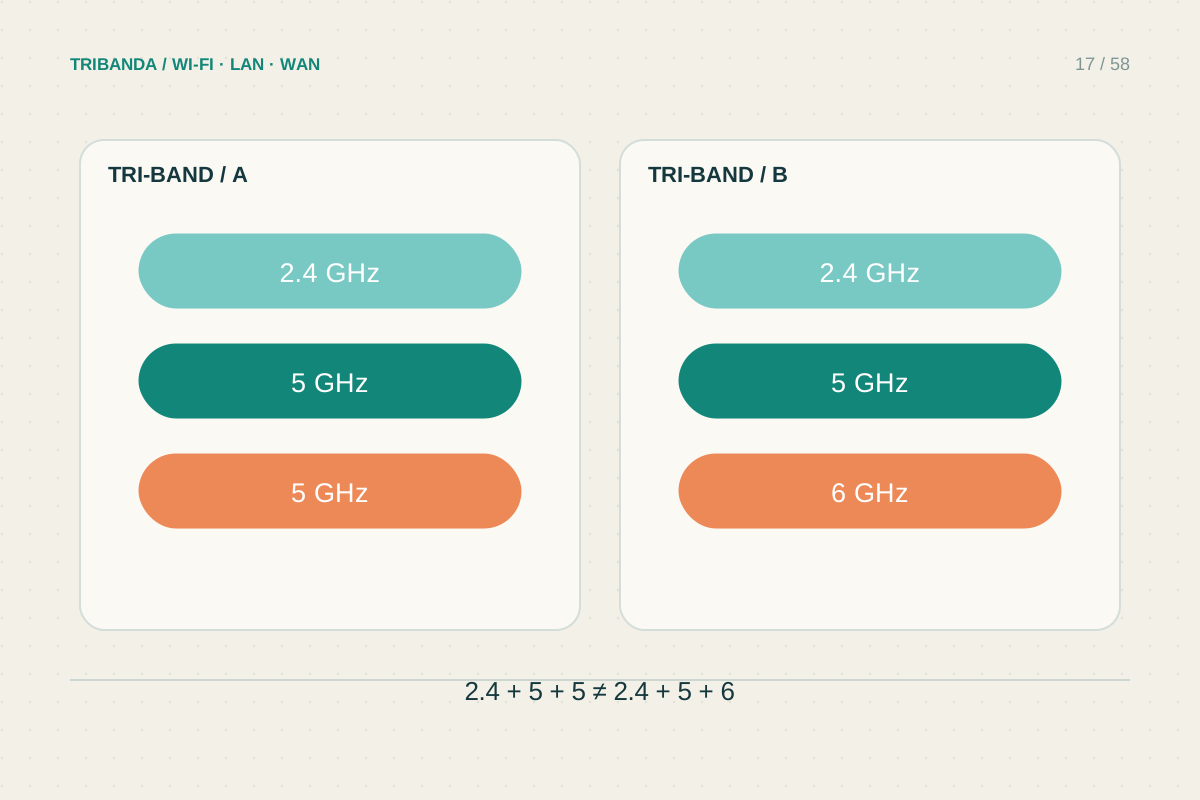
A traditional tri-band router may combine one 2.4 GHz radio with two separate 5 GHz radios. A newer design may combine 2.4, 5 and 6 GHz instead. These arrangements serve different devices and use different available spectrum, so the same label does not describe an identical upgrade.
Read the specification table rather than inferring bands from the generation name. Check which bands your important devices support. An older television cannot use a 6 GHz radio directly, although a mesh system may use that radio between compatible nodes and serve the television on another band.
Find the route used between nodes
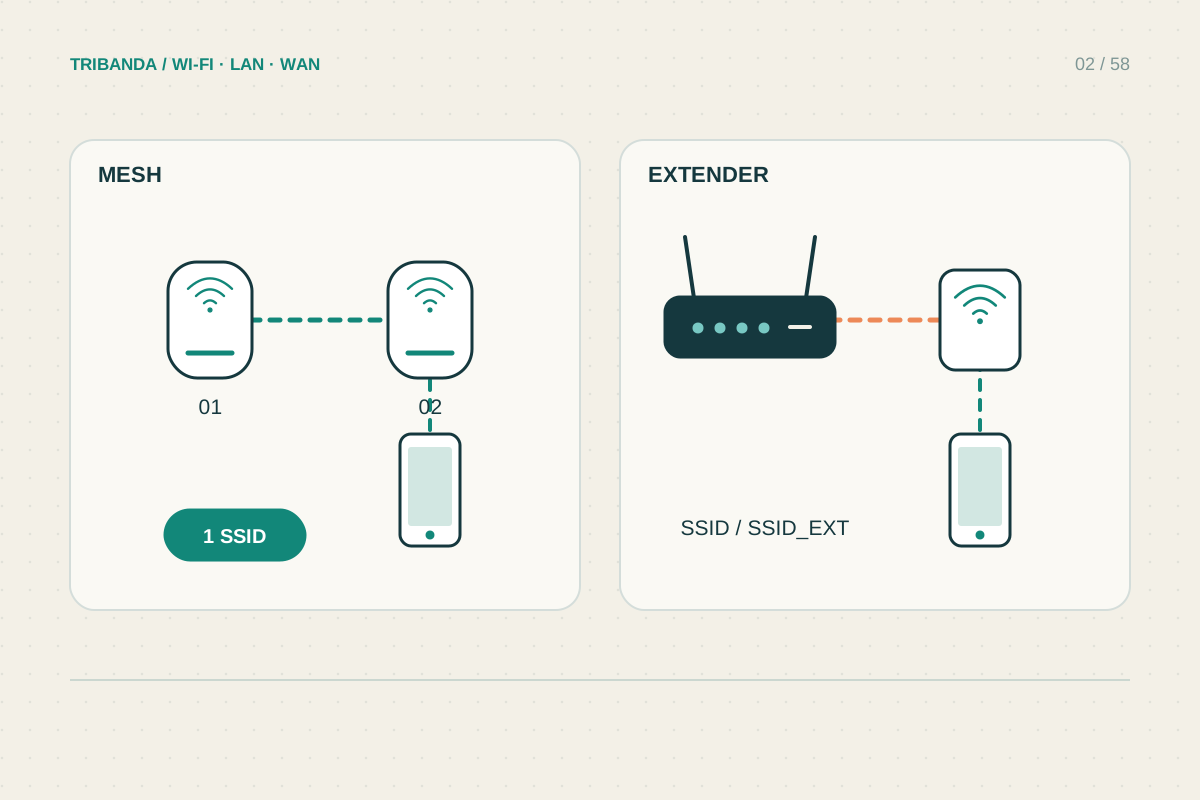
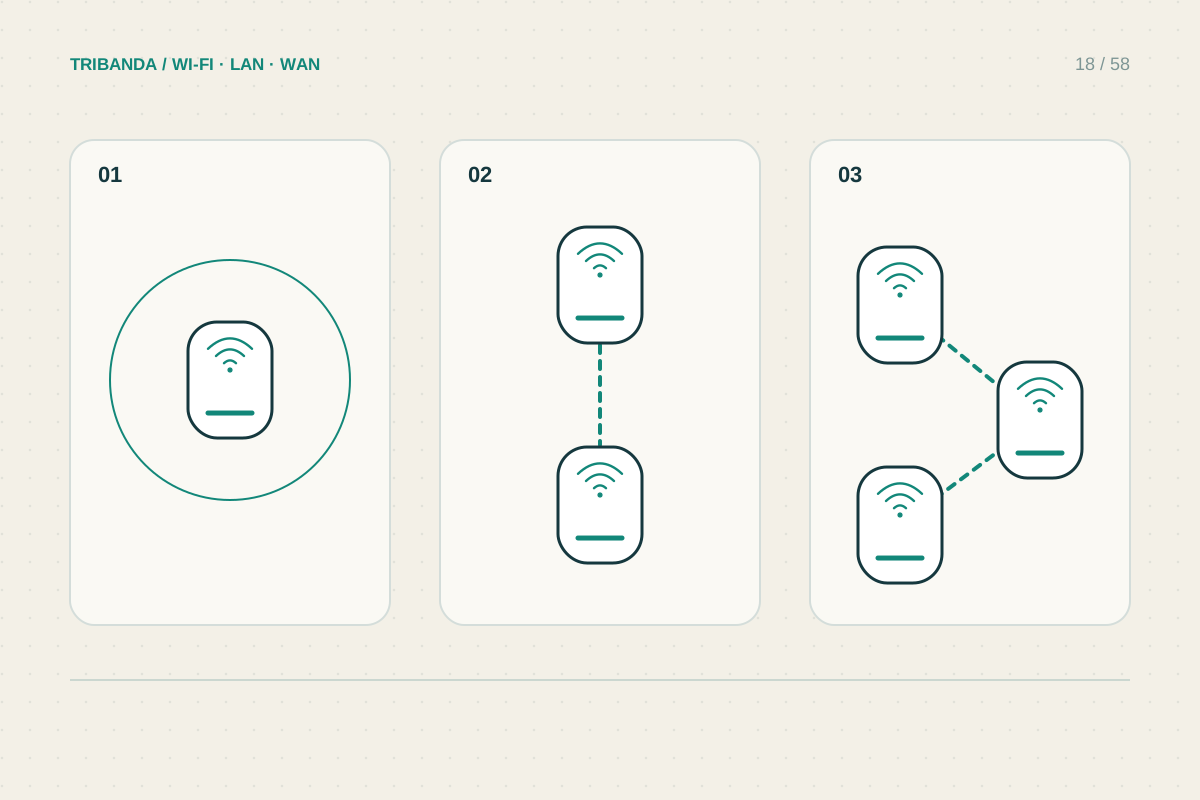
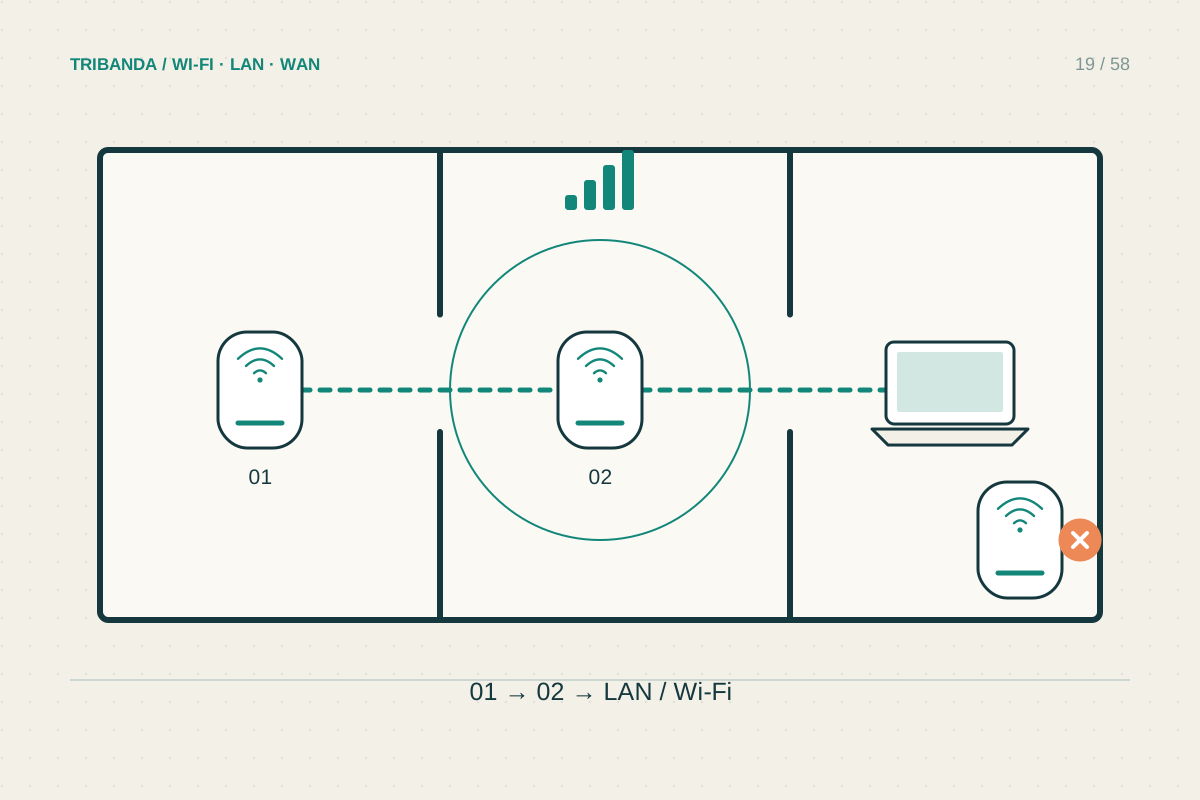
Mesh traffic needs to travel from a satellite to the main network. An additional radio can provide more options for that backhaul, and some products reserve one for it. Others share a radio with clients or select paths dynamically. The exact model and configuration determine what happens.
A dedicated radio still needs a usable signal through the building. It is not a cable and does not ignore dense floors. If the house already has Ethernet sockets, compare a wired backhaul arrangement before deciding that an extra wireless band is essential for the upstairs office.
- List the exact frequencies in the specification.
- Check bands supported by your key devices.
- Read whether backhaul is dedicated, shared or configurable.
- Compare Ethernet backhaul if a cable route exists.
- Evaluate the full path, including ports, rather than multiplying advertised numbers.
Match the extra capacity to a real task
If several capable devices operate near different nodes, additional radios may help distribute traffic. If one old laptop browses over a modest broadband connection, the extra band may sit largely unused. Write down the bottleneck you expect it to remove before treating tri-band as a requirement.
Advertised combined wireless rates add capabilities across radios under specified conditions. They are not the download rate one ordinary client will receive. Also check WAN and LAN ports: a fast radio cannot carry an internet stream through a slower upstream port at its headline aggregate rate.
Tri-band is a design description. Its value depends on supported clients, node links and the constraint you need to remove.
Common questions
Will my phone use all three radios together?
Do not assume that. Client and router features, including any supported multi-link operation, determine the connection.
Is tri-band always better than dual-band?
No. A well-placed dual-band system with wired backhaul may suit a home better than poorly placed extra radios.
Original technical illustration; schematic, not to scale.