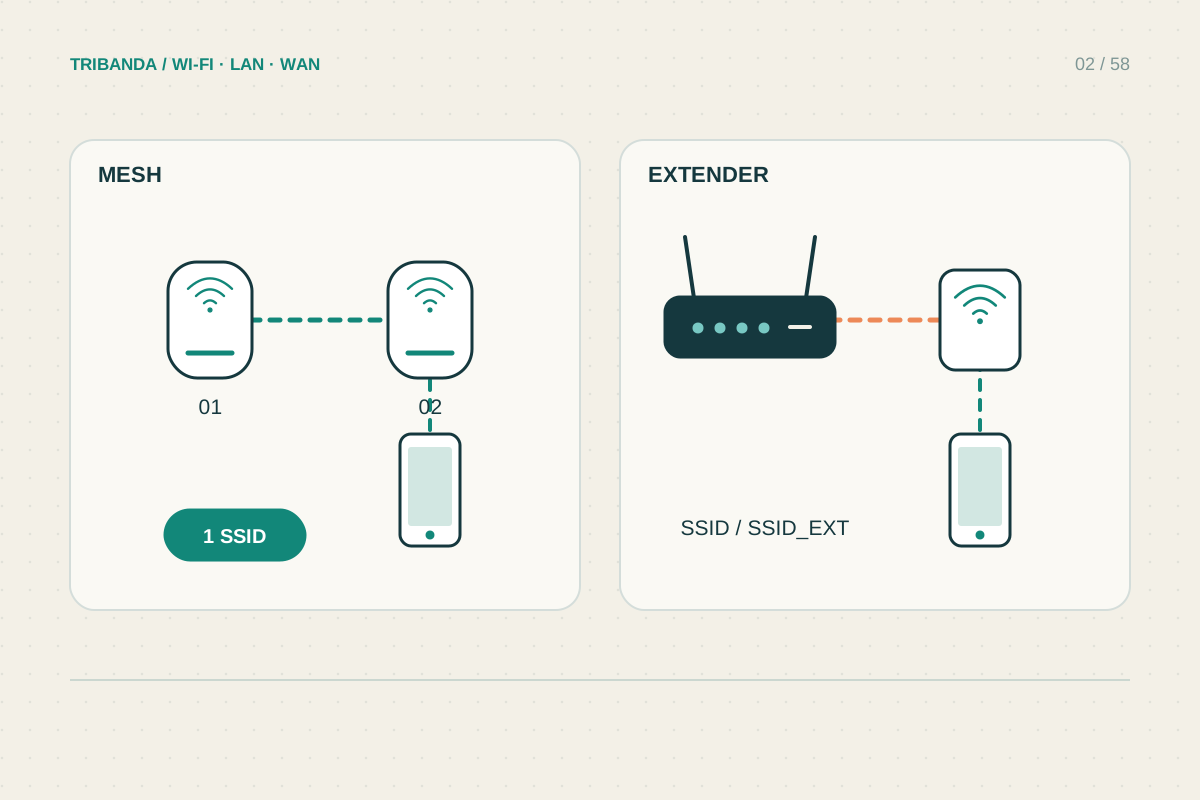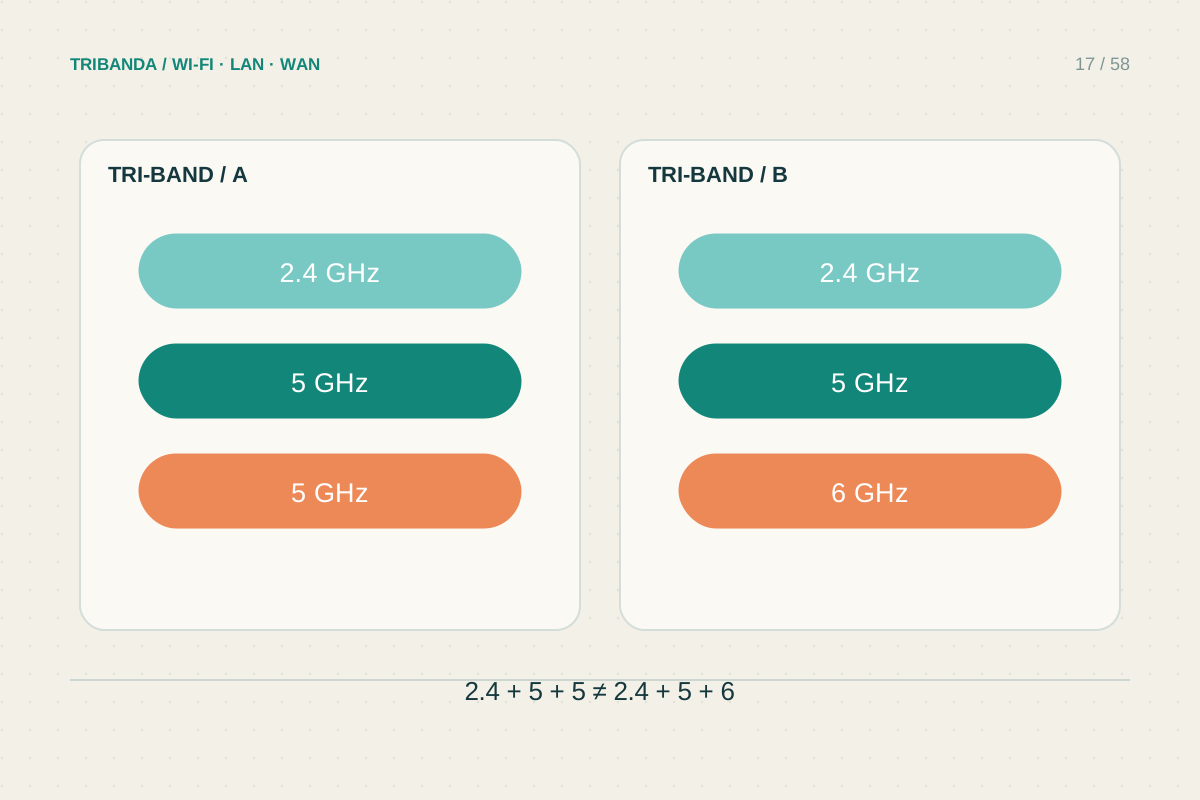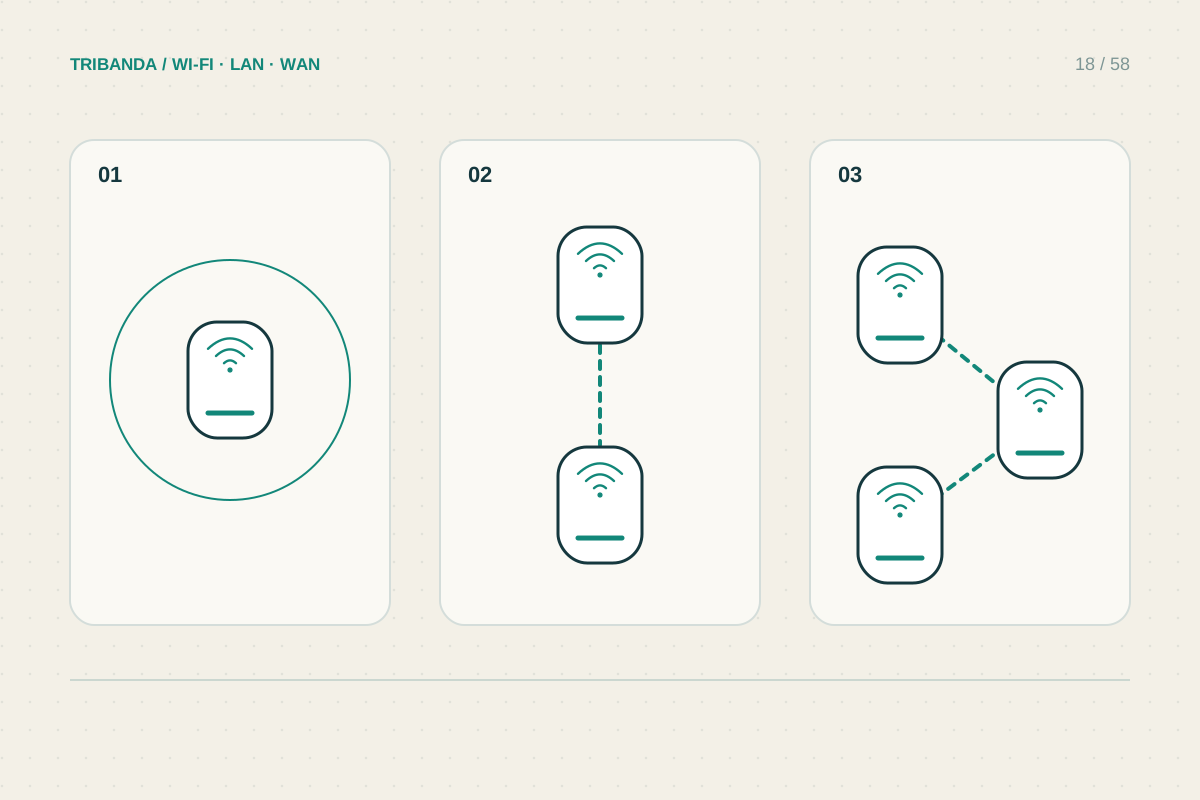
Two devices can provide Wi-Fi in the same home without forming one coordinated mesh. The distinction matters when buying an extra node: matching the network name or even the brand does not establish compatibility. Look for explicit support for the exact combination and the role each unit can perform.
Separate coexistence from mesh membership
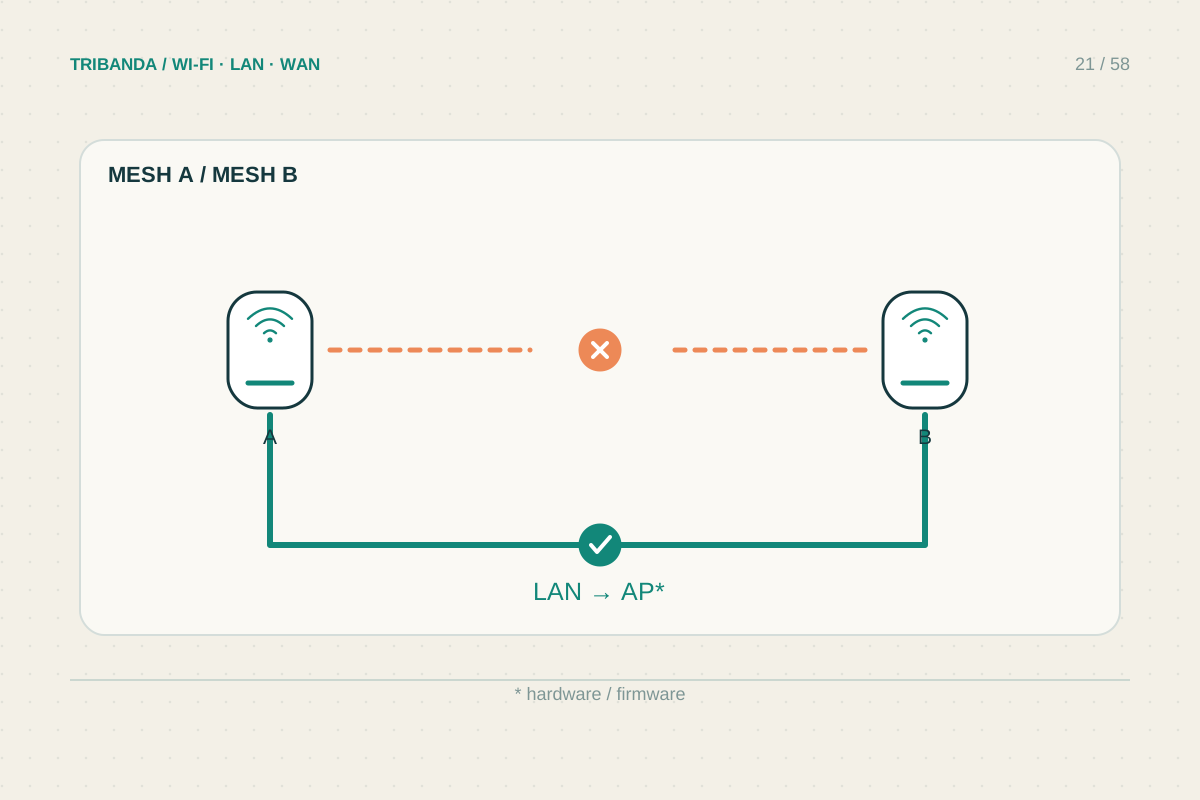
An access point connected by Ethernet can share the same local network as a router from another brand. That can be a useful arrangement. It does not mean it joins the router’s mesh controller, shares its topology screen or supports all of its roaming and management features.
Manufacturers can maintain several incompatible mesh families. TP-Link documents differences among Deco, OneMesh, EasyMesh and Omada. ASUS lists models and firmware supporting AiMesh. Read those lists and the hardware revision before ordering; a large compatibility logo on a retailer page may omit important restrictions.
Check standards without assuming every feature
EasyMesh can provide a basis for interoperability when the particular devices and firmware support the required roles. It is not a promise that every product called mesh will pair with every other. Confirm controller and agent support, wired backhaul and any vendor limitations in the current documentation.
Ask specifically about the features you rely on: guest-network propagation, device isolation, parental controls, Ethernet backhaul and node management. Basic joining and complete feature parity are different questions. Keep the original working network available while trying the additional unit.
- Record exact model numbers, hardware revisions and firmware.
- Identify the supported mesh family and unit roles.
- Verify the required combination in official compatibility guidance.
- Pair near the main unit and test essential features.
- Use a deliberate wired-access-point arrangement if mesh membership is unsupported.
Choose a practical fallback
If coordinated membership is unsupported, a wired access point can still extend coverage. Plan channel use, security and local addressing deliberately. Clients decide aspects of roaming, so a common SSID does not guarantee that a phone switches quickly during a call. Test movement with the devices you use.
For a straightforward consumer setup, compatible units from a documented family are usually easier to administer. Reusing equipment may save a purchase, but consider updates and support as well as pairing. Do not retain an unsupported old router solely because it can advertise the same network name.
Interoperability needs explicit evidence. Sharing Wi-Fi and joining the same coordinated mesh are separate capabilities.
Common questions
Does the same brand guarantee compatibility?
No. A manufacturer can have several mesh families and model-specific restrictions.
Can an incompatible mesh unit be used over Ethernet?
Possibly, if it supports a suitable access point mode. Verify the model and expect separate management.
Original technical illustration; schematic, not to scale.